Frontend, Backend, Product Design or DevOps? Choosing Your Tech Track If You're Starting From Zero
By Yemi Ogundairo on

The single most expensive mistake a tech career-switcher in Nigeria makes is starting to learn before they choose a tech track. Six months of "learning everything a little" leaves you with no projects, no portfolio, no momentum, and a vague sense that you are bad at tech. The truth is you were bad at choosing.
This guide walks through the five most-hiring tracks in Nigeria right now, what each one actually involves day to day, the aptitudes that fit each, and what to do this week if a track resonates.
How to read this guide
Each track gets the same five sections: what the role is, a typical Tuesday, who fits, who does not fit, and how long until you are employable. Read all five even if one jumps out immediately. The track you discount on first read sometimes turns out to be the best fit.
Track 1: Product Design (UX / UI Design)
What the role is
Product designers figure out how a piece of software should look and feel before anyone writes the code. They talk to users, sketch interfaces, build prototypes in Figma, run usability tests, document patterns, and hand off polished designs to engineers.
In Nigerian startups, designers often double as researchers and sometimes as content writers. In larger companies, the role is more specialised.
A typical Tuesday
9:00 - 10:30: design critique with two other designers and a product manager
10:30 - 12:30: refine a checkout flow in Figma based on user interview notes
12:30 - 13:30: stand-up, lunch
13:30 - 15:30: prototype the refined flow in Figma, test interactions
15:30 - 17:00: write up usability test findings, ship documentation in Notion
Who fits
You notice when something looks "off" before anyone else points it out
You enjoy thinking about other people's mental models and motivations
You are comfortable not having a single right answer
You can take critique without flinching
Who does not fit
You want clear binary "this works / this doesn't" feedback (engineering is more your jam)
You dislike open-ended ambiguity
You find user-interview-style conversations draining
Time to employable
8 to 12 months with focused effort. Junior Product Design roles exist in Lagos and remote, with starting salaries in the NGN 250k to 700k range for local pay and $800 to $2,000 for international remote.
How to test the fit this week
Open Figma (free tier), pick a Nigerian app you use daily, and redesign one screen. Not the whole app. One screen. Write a one-paragraph explanation of what you changed and why. If that exercise was fun, you have your answer.
Track 2: Frontend Engineering
What the role is
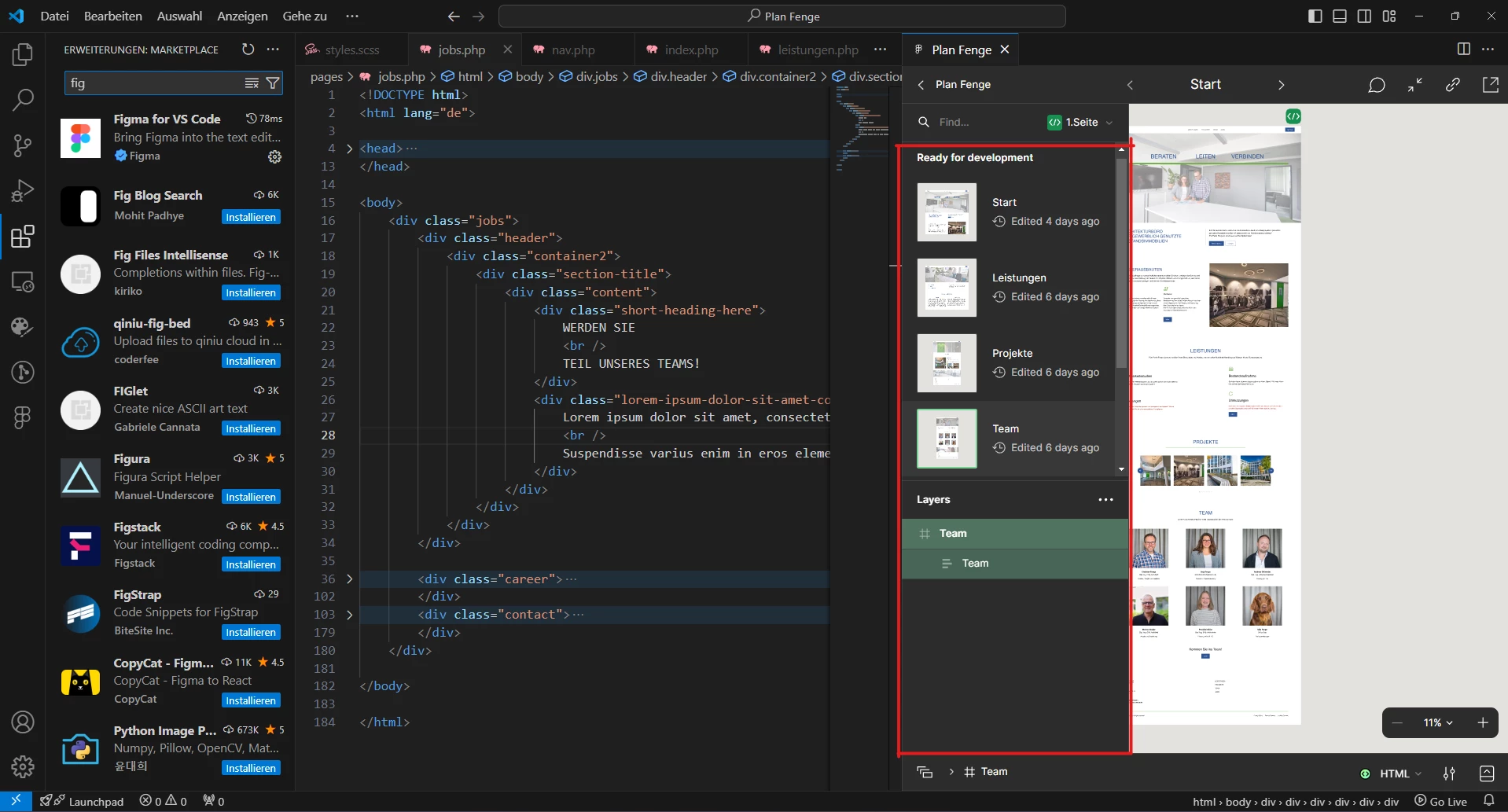
Frontend engineers build the visible parts of websites and apps: the buttons, the layouts, the animations, the forms, the dashboards. They take designs from the design team and turn them into working interfaces that real people interact with. The dominant stack in 2026 is React or Next.js with TypeScript and Tailwind CSS for web, and React Native for mobile.
A typical Tuesday
9:00 - 10:00: review pull requests from yesterday, stand-up
10:00 - 12:00: implement a new dashboard component based on Figma designs
12:00 - 13:00: pair with backend engineer to integrate a new API
13:00 - 14:00: lunch
14:00 - 16:00: fix a layout bug on mobile, write a unit test
16:00 - 17:00: deploy to staging, demo to product team
Who fits
You enjoy the moment a piece of UI clicks into place
You are comfortable with code but you also care about how things look
You can hold both detail (pixel-precise alignment) and big picture (what this whole flow does) in your head
Who does not fit
You don't actually care about how the interface looks (then learn backend instead)
You hate CSS (this is fixable; CSS becomes friendly with practice)
Time to employable
6 to 9 months with focused effort. Frontend junior roles are arguably the most plentiful in Nigeria right now because every startup needs a frontend engineer. Starting salaries NGN 300k to 800k locally, $1,000 to $2,500 remote.
How to test the fit this week
Clone any production website you admire (don't republish it). Try to recreate the homepage as closely as you can in HTML and CSS, then in React. Notice whether you find the puzzle fun or grim.
Track 3: Backend Engineering
What the role is
Backend engineers build the invisible parts of software: APIs, databases, business logic, authentication, payment processing, background jobs, integrations. The dominant Nigerian stack is Node.js or Python with PostgreSQL, sometimes Go for performance-critical paths.
A backend role in a Nigerian fintech, for example, often involves writing the code that calculates interest, talks to Paystack or Flutterwave for payments, and stores user transaction history securely.
A typical Tuesday
9:00 - 10:00: review error logs from overnight, triage a bug
10:00 - 12:30: implement a new API endpoint for the mobile app team
12:30 - 13:30: lunch, stand-up
13:30 - 15:30: design the database schema for a new feature with the tech lead
15:30 - 17:00: write tests, code review a teammate's PR
Who fits
You enjoy logic puzzles and abstract problem-solving
You are comfortable not seeing visual output from your work
You find systems thinking satisfying (how all the pieces fit together)
You like reading and writing in depth
Who does not fit
You need visual feedback to feel motivated (frontend or design suits better)
You dislike algorithms and data structures (you can avoid the deep theory, but some surface familiarity is unavoidable)
Time to employable
6 to 12 months. Backend takes slightly longer to skill up in than frontend because the surface area (databases, networking, auth, business logic) is broader. Compensation is typically slightly higher than frontend juniors.
How to test the fit this week
Build a tiny API in Python (FastAPI) or Node (Express) that returns a list of three movies in JSON. Add a second endpoint that lets you POST a new movie. Deploy it to a free service like Render or Railway. If the puzzle of designing the endpoints felt satisfying, this is your track.
Track 4: DevOps and Cloud
What the role is
DevOps engineers keep the infrastructure that runs software alive, reliable, and scaling. They set up servers, containers, CI/CD pipelines, monitoring, security, and deployment workflows. The dominant tools in 2026 are Docker, Kubernetes, Terraform, AWS or Azure, GitHub Actions, and observability tools like Datadog or Grafana.
In Nigeria, DevOps is one of the highest-demand specialisations because there are far more product engineers than infrastructure engineers, and almost every fintech needs reliable infrastructure to handle Nigerian payment volume.
A typical Tuesday
9:00 - 10:00: check dashboards, review overnight alerts
10:00 - 12:00: set up a CI/CD pipeline for a new microservice
12:00 - 13:00: lunch
13:00 - 15:00: investigate a performance issue with the production database
15:00 - 17:00: write infrastructure-as-code for a new staging environment
Who fits
You are obsessed with reliability and "things working"
You enjoy automation (anything you do twice should be scripted)
You don't mind being on-call sometimes (most DevOps roles include rotations)
You like the satisfaction of invisible work that nobody notices when it's done well
Who does not fit
You want to ship visible features users see (product engineering is closer to that satisfaction)
You dislike systems administration and command-line work
Time to employable
10 to 14 months. DevOps takes longer because the prerequisite knowledge (Linux, networking, security) is broader. Pay is generally higher than other tracks at every level. Starting salaries NGN 500k to 1.2M locally, $1,500 to $4,000 remote.
How to test the fit this week
Take any tiny web app (yours or a tutorial's) and put it in a Docker container, write a docker-compose file, then deploy it to a free tier of any cloud provider. If wrestling with that felt like solving a puzzle rather than slogging through mud, DevOps may be your lane.
Track 5: Cybersecurity
What the role is
Cybersecurity professionals defend systems from attacks. The discipline spans many sub-tracks: application security (testing software for vulnerabilities), network security, cloud security, security operations (responding to incidents), governance and compliance, and offensive security (red-teaming and pentesting).
In Nigeria, demand has accelerated sharply since 2023 due to fintech regulatory requirements (NDPR, CBN cybersecurity framework). Junior roles are real and growing.
A typical Tuesday
9:00 - 10:00: review yesterday's security alerts, triage anything suspicious
10:00 - 12:00: run a vulnerability scan on a new application before launch
12:00 - 13:00: lunch
13:00 - 15:00: document a phishing incident from last week and recommend changes
15:00 - 17:00: review a draft compliance report with the CISO
Who fits
You are curious about how things break and how attackers think
You have strong attention to detail
You can communicate technical risk to non-technical people
You are patient (security work can be slow and incremental)
Who does not fit
You only want to build things (security is mostly defensive)
You find regulatory and policy work tedious (governance is a real part of the job)
Time to employable
10 to 14 months for an entry-level SOC analyst or application security role. Starting salaries NGN 400k to 900k locally, $1,200 to $3,500 remote.
How to test the fit this week
Sign up for TryHackMe or HackTheBox (free tiers), complete the beginner path, and see whether you find the puzzles addictive or frustrating.
The decision tree: how to choose a tech track in one page
If you only read one paragraph, read this one.
You care most about how things look and feel → Product Design
You want to see your work on screen but enjoy code → Frontend
You enjoy logic, systems, and abstract problem-solving → Backend
You enjoy reliability, automation, and invisible craftsmanship → DevOps
You enjoy thinking like an attacker and defending systems → Cybersecurity

What to do next once you choose a tech track
Once you have a track in mind, here is the first month, generic across all five:
Week 1: Set up your tools. VS Code or Figma, GitHub account, free cloud account.
Week 2: Complete one introductory course end-to-end. Don't half-finish.
Week 3: Build the smallest possible thing in your track. Deploy it.
Week 4: Show it to one person who is already in tech. Ask for honest feedback.
If you make it through that month, you have evidence that the track fits. If you stalled, the track may be wrong, or the format (self-learning) may be wrong. Read our comparison of sponsored bootcamps and self-learning to figure out which.
A note on switching tracks later
You can switch tracks. Plenty of Nigerian engineers started as designers and moved into frontend, or started as frontend and moved into DevOps. The first track teaches you the craft of being employable in tech, and the second track is much easier to learn because the meta-skills (Git, project workflow, communication, deployment) transfer.
The mistake is switching tracks in month 3 because you got bored. Boredom in month 3 is normal. Push through to month 6 before you reconsider.
Where we come in
Our sponsored cohorts offer all five tracks. Application is the same across tracks: short form, 20-minute screening call, then offer letter with the commitment details. If you're still undecided between two tracks at the application stage, mention both on the form and we will use the screening call to help you pick.
Reach out if you want a conversation before applying. Picking a track is worth getting right.